

Stop procrastinating and just do it!

career-coaching

Do you procrastinate over making decisions about your career, leaving your success to chance? 

A few years ago, I did a seminar for the Coventry and Warwickshire Young Professionals titled ‘A great way to get ahead in your career and it’s much better than leaving it to chance’.  It was about developing the ability to step out of your comfort zone and take control to enable you to achieve a fulfilled and successful career, full of opportunities and enjoyment.

Sounds simple, doesn’t it?  All you need to do is take control and you will be successful and happy.

If only it was that simple.  If it was, I would certainly be out of a job!  This is certainly a case of ‘easier said than done’, but why?  Why is it so hard to take control of our own lives?   Why do people need my help?

Procrastination, procrastination, procrastination…

Yes, we procrastinate.

I am sure you have been guilty of procrastinating, finding it creeping into your decision-making process and casting doubt on your great ideas.

Think about it.  What was the last big thing you wanted to achieve in your career?

  • A promotion at work?
  • A better work life balance? (Given we spend 70% of our waking energy on work, unsurprisingly I hear this one a lot.)
  • A career change?

What happened next?  Did you achieve it?

We all want things from our working lives, but often it stops there.   Procrastination takes control and we do nothing about it.  We leave success to chance.

However, it doesn’t have to end there.  You don’t have to leave your career progression to chance.  If you want to get ahead, there is a more beneficial and reliable way….

 Just do it….

  • Do something about it: Become aware of the challenges you face at work and the resources available to overcome them– don’t wait for someone to tell you what to do (it may never happen).
  • Do try different things: if what you are doing is not working, try something else. For example, if you are constantly running out of time to complete work – research different time management techniques and adapt the way you work. It could be as simple as turning off your emails for parts of the day as emails are a big distraction. 
  • Do think long term – Think to the future. What are you aiming for? Make an action plan to help you to move forward in the most efficient way.  

Needing more inspiration? Have a look at this:

Art Williams: Just do it speech

As Art says, just do it!  Take control and do it – this is much better than leaving your career to chance.

If you don’t climb the mountain, you can’t see the view (Harvey Mackay)

How to explain a career break

career break

Have you ever taken time out of your career and subsequently found yourself worrying endlessly about how to explain this break in a job interview? 

I was recently asked to contribute to an article on career breaks on jobsite.co.uk.   Whilst reflecting on the subject, I realised that through my coaching work I am starting to see a rise in the number of people taking career breaks.  They are taken by individuals for many different reasons and at different stages of their career.  Some take time off to look after their children or a sick relative, some are having time out having experienced a stressful time in their previous work, others want to experience something completely different through voluntary or project work.

Whatever the reason for your career break, returning to the workplace can feel daunting and this is often made worse by a common misconception amongst ‘career breakers’ that prospective employers will be reluctant to employ someone who has had a career break.  However, you will be pleased to hear this is not true.  If you focus on how you used your career break to your advantage so that a prospective employer can understand your reasons for the break and what you gained from it, they will be far more interested in employing you.

Tips for returning to work

If you are planning on or are currently taking a career break, have a read through the following headings to help you start preparing for your return to work.

Be positive

Be positive about your experiences to enable you to demonstrate what you have gained from the break.  Focus on what you have done, not what you haven’t done.  It’s all about developing the right attitude.

Be Prepared

Prior to taking a career break, think about what you want to achieve and how you may wish to use your experience upon your return to the workplace.

Whilst taking your career break, develop your ideas about what you want from your future career. Be open to meeting new people and discovering new opportunities.

Remember, you will always have strengths and skills to offer a prospective employer. Spend time identifying these.

Be organised

Once you have decided what you want to do after your career break, make an action plan to enable you to network, seek additional help and prepare for applications and interviews.

Practise

Rehearse the benefits of your career break to ensure you can fluently explain this to a prospective employer.

If you would like to read more about career breaks, have a read of the article I referred to, ‘Taking a career break from work’, for more information and guidance.

www.tessaarmstrong.co.uk

Hidden careers you never knew existed

peoples_careers_icons_various_colored_types_hexagon_isolation_6826946

The more time you spend investigating different sectors, the better suited your career choice will be.

I was unsurprised by a recent headline that popped up in my newsfeed last month.

Children in poorer countries have higher career aspirations than UK

On the face of it, you would perhaps question the accuracy of this headline when there are hundreds of amazing careers available to us in the UK within countless sectors.  However, this article was prompted by the results of a survey of 20,000 children so there must be some truth behind it!

The finding from the survey that took my interest was the evident need for children to be introduced to different types of careers at an early age.  As children are heavily influenced by their social surroundings and who they know, their career expectations did not always match the opportunities available to them, limiting their chances of finding a career that gives them happiness and fulfilment.

However, it is not just children who lack knowledge of different sectors.  Adults, through no fault of their own, are guilty of this too!

How many different career sectors are you aware of?

At school, we were typically taught to think about careers in fixed categories with no overlap, common examples being law, medicine, veterinary science, engineering and teaching.  This is fine until you have spent five years in your chosen sector and realise it doesn’t quite feel right for you (perhaps it didn’t ever feel right).  Your job role may contradict your true values or differ from your interests.  However, you feel your career choices are limited and have little knowledge of what else you can do.

The reality is, there are thousands of sectors to choose from.  There is something for everyone, to fit with all personalities, skills and interests.  If you were not introduced to these at an early age, perhaps it is time now to seek them out.  Identify your passions and start making links between them by stretching your imagination.  Pretend you are back at school again and revisiting your choice!    For example, if you are interested in young people, education and creative writing, expand your thinking beyond teaching.  You could investigate writing short stories or educational materials or working for a charity that promotes creativity in young people. There will be so many different and exciting strands to explore.  Just remember, your investigations may take a few steps rather than one big jump!

Expanding your sector choices will increase the opportunities available to you and enable you to find a career that best suits you.

www.tessaarmstrong.co.uk

Unpacking an inspiring career in 2018

suitcase

Can we all find an inspiring career which makes us feel happy and fulfilled?

We all want a career we love but often lack the ability to find the job that inspires us the most.  In fact, many people I speak to say they would change career tomorrow if they could but have no idea what motivates them or what they could do.  I then wonder, where has their positivity gone?  Where has their childlike curiosity disappeared to?  Do they really have no idea about what motivates them?

The reality is that our positivity and curiosity does not disappear but instead becomes buried deeply under a sea of everyday thoughts and beliefs about ourselves, the world and the future.  These have formed through past experiences, knowledge and predictions for what might happen. 

‘I am not good enough’

‘If it goes wrong it will be my fault’

‘They will think I’m crazy’

It is these negative thoughts that are pushing your positive thoughts under the surface and preventing you from being open to opportunity and fulfilment.

So, how do we allow our positive and curious thoughts to resurface?   Well, if you bear with me for a moment and use your imagination to work through the following instructions, I will attempt to help you…

First, pack the interfering everyday thoughts into an old suitcase and secure the case (you can unpack them later if they mean that much to you!). 

Your positive and creative thoughts now have room to resurface, retrieve these and pack them into a new suitcase.  Use these questions to help your thinking:

What jobs would you like to try for a week?

If all jobs were paid the same, what would you do?

What are the three things you feel most passionate about?

Great!  You now have two suitcases, one with new inspired thoughts, the other with old everyday thoughts. 

Now imagine both these cases are on an airport conveyor belt. They will pass you once and you must choose just one of them to take home and continue filling, the other will be left behind.  Which case are you going to keep, the case of positive ideas and thoughts or the case of old everyday thoughts? 

Quick, they are passing you…this is your chance…GRAB ONE NOW!

I am sure you are now getting the point! 

Remember, you know yourself better than anyone else.  If you actively seek out the thoughts and ideas that will give you the best chance of finding an inspiring career, you will find happiness and fulfilment.

WISHING YOU ALL A VERY HAPPY AND INSPIRED NEW YEAR!

www.tessaarmstrong.co.uk

Tessa’s 2017 career blog round-up – something for everyone!

career clipartWill you be pondering over your future career during the Christmas break?  If so, perhaps one of my blogs from 2017 will help to guide your thoughts.  I have provided all the links below (please excuse any inaccuracies with the publishing date– these became slightly muddled when I launched my new website in June!).

There is something for everyone –  whether you need help with your current job or would like to search for something new. Have a look…..

Stop waiting, take action! (Jan)

How to cope if you are put at risk of redundancy (Jan)

How to get a new job now – The three Ps! (Feb)

Four ways to feel happier at work (March)

Are you tired of being available 24/7? (April)

3 steps to turn your fear of rejection into career success (May)

How to make the first step towards finding a job that suits you (June)

How to stop stress preventing you from pursuing changes in your career (July)

Four focus points to help you make a good impression when starting a new job (July)

Who is the best person to tell you what job you should do (and it’s not me!)? (Sept)

Three steps to overcome your fear of being judged (Sept)

The importance of learning to say ‘no’ (Oct)   

Does looking at past events help you change career? (Nov)

Are you fed up of worrying about your career? (Dec)

Five ways to overcome setbacks (Oct – Life Coach Directory)

Is it time to stop feeling so stressed at work? (Dec – Life Coach Directory)

I look forward to being in touch again with more blogs in the New Year!  In the meantime, I wish you a very merry Christmas!

www.tessaarmstrong.co.uk

Does looking at past events help you change career?

motivation-clipart-cliparti1_motivation-clipart_05“If you change the way you look at things, the things you look at change” (Wayne Dyer)

An increased understanding of your response to past events, enables you to think more positively and develop greater self-confidence to act on the best career decisions for you.

When I first meet an individual for career coaching, I am often greeted with a look of surprise when I ask them to rate everything they have done from school to date by their motivation. I can understand their surprise, for they have come to me for help with their future career path and not their past. However, it is an invaluable exercise in identifying attitudes and beliefs which can hinder or help the career change process.

Our attitudes and beliefs are shaped through our response to experiences and events and dictate how we feel and behave. When our response to an experience forms a negative belief, we can feel miserable and our motivation for exploring new and exciting career possibilities is low. In contrast, when we have positive thoughts, our motivation is high, and we become far more willing to try new things.

In reviewing our motivation from past experiences, we can start to identify our positive and negative beliefs, and this can help us make future decisions. I will show you how through two examples:

1: Negative beliefs

I work with many solicitors who initially give their motivation at work a low rating. One common reason for this is the frequency of having to deal with telephone calls from unhappy clients. Dealing with these calls can make individuals feel anxious about speaking on the phone as they begin to mistakenly believe they are not good at dealing with people. Consequentially, they decide that their next career move must avoid this. When thinking of a career change, it is important to deal with negative beliefs such as this and learn to change them to avoid closing the door on possible opportunities too early in the career change process.

2: Positive Attitudes

In reviewing past events, we can also identify experiences that made us respond with a positive attitude and feel really motivated. Perhaps you did some volunteering for a charity which made you feel good about yourself and wanting to do more. In reviewing these positive experiences, it is important to look at what specifically you were doing during the experience that made you respond in this way – these activities and skills will be relevant when deciding on a best fit career.

Evaluating past events helps you to understand your thoughts and beliefs. How you think will affect how you feel about your next career choice and the subsequent action you take. Positive thoughts and beliefs will enable you to make the best decision regarding your career.

www.tessaarmstrong.co.uk

Three steps to overcome your fear of being judged

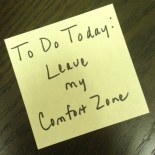
Good-bye-Comfort-Zone

Everything you want is just outside your comfort zone. (Robert Allen, author/speaker)

I have recently been busy updating my social media accounts, an activity many would find easy as it simply involves updating profiles and sharing useful messages and articles. However, for me, it is not so easy. It takes me right out of my comfort zone and, when I wonder why, I think this is because part of me fears being judged through social media’s power to amplify public opinion.

What will other people think of me? What happens if a negative comment is posted on my LinkedIn or Facebook page for all to see? What happens if someone disagrees with me?

In the end I sometimes find myself procrastinating over the perfect wording to avoid judgments being made. Perhaps that is the lawyer in me requiring 100% accuracy and perfection! However, is perfection possible? Can I really control other people’s reactions in this way? No, of course I can’t, and the immediate and public nature of social media does not allow for this. To be noticed you need to step out of the norm (despite the risk of attracting diverse attention). There is also no time for procrastination when you have a business to run!

As well as procrastination being a risk factor, the fear of being judged can be really debilitating for some people. It can quickly lead to a loss of self-esteem as it causes individuals to become anxious or easily embarrassed. Not many people want to look silly and this can lead to individuals keeping quiet rather than doing what they want to do.

Does this fear sound like something that is affecting you from confidently moving forward with your ideas?  If so, use these three steps to help you to challenge your fear.

  1. Be decisive – do you want your fear of being judged to hold you back?  Your fear affects your feelings and these feelings affect your behaviour, preventing you from achieving what you want to achieve. Don’t let the opinions of others become more valuable than your own individuality, allowing others to hold you back. You may miss the career opportunity you have always hoped for.
  2. Be curious – think of something more useful to believe.  It is your thought patterns around fear which need to change first to enable you to change your behaviour. Instead of holding a fear of judgement, replace your thoughts with curiosity. You may learn new things that help you move forward with your plans and strive towards your goals.
  3. Take action….    

…..I am now going to be bold and take action by inviting you to follow me on LinkedIn or to Like my Facebook page. Please also share anything that you believe would be useful to others. I share lots of information to help those wishing to change career, develop their career or improve performance.

I am also thinking about making and sharing short video clips with helpful career tips…watch this space!

Everything you want is just outside your comfort zone. (Robert Allen, author/speaker)

http://www.tessaarmstrong.co.uk

Who is the best person to tell you what job you should do (and it’s not me!)?

maze

We all want someone to tell us what job we should do, to make the decision on our behalf so we can simply focus on enjoying our career.

Sounds good, doesn’t it? I know that’s what I wanted when I was pursuing a career change. The decision-making process was hard work and I just wanted someone to tell me what to do. When I was advised that the best decision would be the one I made for myself, I realised I needed to take responsibility and do some serious thinking!

What did I discover? I found that I was frequently being given advice on what I should or should not do and I didn’t know which advice to follow. I soon realised I would be far more committed to a decision I had made personally, rather than a decision someone had made for me or advised me to make, and what I really needed to do was develop a thorough understanding of my skills, passions and aspirations to enable me to make that decision.

Still not convinced? Let me give you another example….

Do you remember the career advice you received at school?

I have a very distinct memory sitting in the school careers room completing a personality questionnaire and subsequently being advised, amongst other things, that I should be a probation officer. It was as simple as that…the answer to my future career was found by completing a 10-minute test. Was this the right answer? Well, I did not become a probation officer!

There can be limitations in being pigeon holed into a specific career before you are ready to make that decision. It can lead to career paths being pursed but not enjoyed and an individual’s confidence being knocked. Many people need time to build their self- awareness and once they really understand what they want from their career, they will then be in the best place to move forward. Many of my clients say they regret following early career advice for this reason. They wish they had spent more time thinking about and discussing their personality and aspirations before taking the next step.

Have I just talked myself out of a job?!

No, because the best thing about all of this is that, although it may be up to you to make the decision, you do not have to go through the process alone. I become part of the process when individuals become stuck and need some help and guidance in moving forward. I help individuals build self-awareness to enable them to discover and explore different career possibilities and find the best career choice for them. I also help individuals to eliminate issues of procrastination, fear and anxiety to enable them to believe that they can achieve a fulfilling career. Career advisers can also help with the decision-making process.

It is all about you and how your career is going to fit in with your life. You may need a bit of guidance and assistance in getting there but….

…the best career decisions are those that you make and discover yourself.

www.tessaarmstrong.co.uk

www.careerchange.blog

Four focus points to help you make a good impression when starting a new job

Handshake

I was recently asked if I had written a blog on starting a new job and making a good impression and was surprised to discover that, over seven years of writing about careers, I had not yet covered this topic. This month I am therefore going to write about four focus points to help you make a good impression when starting a new job.

Making a good impression

When starting a new job, you want to make a good impression. You want to be liked and do your job well. The question is, how do you do this when there are so many different aspects to starting a new job that you have yet to discover. What will the office culture be like? What will my boss/colleagues be like? How will I fit in? What will my daily routine be like?

Starting a new job is an exciting time but can also feel daunting as there is so much to think about and take in. Planning for every eventuality is an impossible task. However, what you can do to help you prepare is to think about your approach to the job and I have identified four focus points to help you:

    1. Preparation: Ensure you are prepared for your first day. What do you need to bring? What are you going to wear? Have you researched the company/organisation?
    2. You: Be open to new ways of doing things and be careful to avoid comparing your new job to your last one. It is important to be confident but not arrogant!
    3. People: Introduce yourself and spend time listening and getting to know people so you can understand more about the office culture and the way people work. Work out who you can go to for help (the things you don’t want to bother your boss with). Ask questions, but not too many.
    4. Work Routine: Throughout your first week, spend time working out the most productive way to structure your day. Be organised and write notes to help you organise the range of information you are given and remember the names of people you have met.

Managing your new job and making a good impression will be a lot easier by being prepared, organised and open to new opportunities! Most importantly, it will help you to enjoy the new experience!


www.tessaarmstrong.co.uk

www.careerchange.blog

How to achieve the best career path for you – Step 3

maze

Creating a plan of action to achieve your new career goal

In a previous blog I wrote about how building your self-awareness is the first best step towards identifying a career that suits you and in my ‘How to achieve the best career path for you – step 2‘ blog I wrote about how, when you have achieved this, it is time to start identifying and exploring different career and job ideas.

One you have progressed through these two steps, it is time to assess the suitability of the different career and job options you have discovered and narrow them down to those that best suit you. To help you carry out this assessment, continue to talk to people working within the relevant career fields and work out how closely each role matches your skill set and interests. Evaluate each option and work out the gaps needed to be filled in order to work in each area.

Once you have narrowed down your options, set your new career goal and create a plan of action to achieve this goal. Write down when you want to achieve it by and each step you will need to take to get there.

Your action plan may include investigating sources of vacancies, preparing a CV and making applications where relevant. You may want to contact recruitment agencies or attend seminars and conferences. It is also really important to continue talking to relevant people within the career field you have identified – you never know who may open a door for you. Networking is often the best way to move in to a new role.

You may also want to spend some time researching interview techniques and finding someone to practise with.

Finally, remember to celebrate when you have achieved the best career for you!

www.tessaarmstrong.co.uk