

Tessa’s 2017 career blog round-up – something for everyone!

career clipartWill you be pondering over your future career during the Christmas break?  If so, perhaps one of my blogs from 2017 will help to guide your thoughts.  I have provided all the links below (please excuse any inaccuracies with the publishing date– these became slightly muddled when I launched my new website in June!).

There is something for everyone –  whether you need help with your current job or would like to search for something new. Have a look…..

Stop waiting, take action! (Jan)

How to cope if you are put at risk of redundancy (Jan)

How to get a new job now – The three Ps! (Feb)

Four ways to feel happier at work (March)

Are you tired of being available 24/7? (April)

3 steps to turn your fear of rejection into career success (May)

How to make the first step towards finding a job that suits you (June)

How to stop stress preventing you from pursuing changes in your career (July)

Four focus points to help you make a good impression when starting a new job (July)

Who is the best person to tell you what job you should do (and it’s not me!)? (Sept)

Three steps to overcome your fear of being judged (Sept)

The importance of learning to say ‘no’ (Oct)   

Does looking at past events help you change career? (Nov)

Are you fed up of worrying about your career? (Dec)

Five ways to overcome setbacks (Oct – Life Coach Directory)

Is it time to stop feeling so stressed at work? (Dec – Life Coach Directory)

I look forward to being in touch again with more blogs in the New Year!  In the meantime, I wish you a very merry Christmas!

www.tessaarmstrong.co.uk

Does looking at past events help you change career?

motivation-clipart-cliparti1_motivation-clipart_05“If you change the way you look at things, the things you look at change” (Wayne Dyer)
An increased understanding of your response to past events, enables you to think more positively and develop greater self-confidence to act on the best career decisions for you.

When I first meet an individual for career coaching, I am often greeted with a look of surprise when I ask them to rate everything they have done from school to date by their motivation. I can understand their surprise, for they have come to me for help with their future career path and not their past. However, it is an invaluable exercise in identifying attitudes and beliefs which can hinder or help the career change process.

Our attitudes and beliefs are shaped through our response to experiences and events and dictate how we feel and behave. When our response to an experience forms a negative belief, we can feel miserable and our motivation for exploring new and exciting career possibilities is low. In contrast, when we have positive thoughts, our motivation is high, and we become far more willing to try new things.

In reviewing our motivation from past experiences, we can start to identify our positive and negative beliefs, and this can help us make future decisions. I will show you how through two examples:

1: Negative beliefs

I work with many solicitors who initially give their motivation at work a low rating. One common reason for this is the frequency of having to deal with telephone calls from unhappy clients. Dealing with these calls can make individuals feel anxious about speaking on the phone as they begin to mistakenly believe they are not good at dealing with people. Consequentially, they decide that their next career move must avoid this. When thinking of a career change, it is important to deal with negative beliefs such as this and learn to change them to avoid closing the door on possible opportunities too early in the career change process.

2: Positive Attitudes

In reviewing past events, we can also identify experiences that made us respond with a positive attitude and feel really motivated. Perhaps you did some volunteering for a charity which made you feel good about yourself and wanting to do more. In reviewing these positive experiences, it is important to look at what specifically you were doing during the experience that made you respond in this way – these activities and skills will be relevant when deciding on a best fit career.

Evaluating past events helps you to understand your thoughts and beliefs. How you think will affect how you feel about your next career choice and the subsequent action you take. Positive thoughts and beliefs will enable you to make the best decision regarding your career.

www.tessaarmstrong.co.uk

Three steps to overcome your fear of being judged

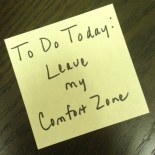
Good-bye-Comfort-Zone

Everything you want is just outside your comfort zone. (Robert Allen, author/speaker)

I have recently been busy updating my social media accounts, an activity many would find easy as it simply involves updating profiles and sharing useful messages and articles. However, for me, it is not so easy. It takes me right out of my comfort zone and, when I wonder why, I think this is because part of me fears being judged through social media’s power to amplify public opinion.

What will other people think of me? What happens if a negative comment is posted on my LinkedIn or Facebook page for all to see? What happens if someone disagrees with me?

In the end I sometimes find myself procrastinating over the perfect wording to avoid judgments being made. Perhaps that is the lawyer in me requiring 100% accuracy and perfection! However, is perfection possible? Can I really control other people’s reactions in this way? No, of course I can’t, and the immediate and public nature of social media does not allow for this. To be noticed you need to step out of the norm (despite the risk of attracting diverse attention). There is also no time for procrastination when you have a business to run!

As well as procrastination being a risk factor, the fear of being judged can be really debilitating for some people. It can quickly lead to a loss of self-esteem as it causes individuals to become anxious or easily embarrassed. Not many people want to look silly and this can lead to individuals keeping quiet rather than doing what they want to do.

Does this fear sound like something that is affecting you from confidently moving forward with your ideas?  If so, use these three steps to help you to challenge your fear.

  1. Be decisive – do you want your fear of being judged to hold you back?  Your fear affects your feelings and these feelings affect your behaviour, preventing you from achieving what you want to achieve. Don’t let the opinions of others become more valuable than your own individuality, allowing others to hold you back. You may miss the career opportunity you have always hoped for.
  2. Be curious – think of something more useful to believe.  It is your thought patterns around fear which need to change first to enable you to change your behaviour. Instead of holding a fear of judgement, replace your thoughts with curiosity. You may learn new things that help you move forward with your plans and strive towards your goals.
  3. Take action….    

…..I am now going to be bold and take action by inviting you to follow me on LinkedIn or to Like my Facebook page. Please also share anything that you believe would be useful to others. I share lots of information to help those wishing to change career, develop their career or improve performance.

I am also thinking about making and sharing short video clips with helpful career tips…watch this space!

Everything you want is just outside your comfort zone. (Robert Allen, author/speaker)

http://www.tessaarmstrong.co.uk

Overcoming Fear of Failure – Making a Career Change Possible

career-coaching

Have you ever thought about changing career but have been so afraid of failing that you decided not to?

In the UK, we are surrounded by opportunities and choices yet so many of us do not take advantage of what is available. We have the option to find a career best suited to our personalities yet choose to remain in a disheartening career because we believe a career change is simply not possible.

Fear of failure is one of the most common beliefs preventing career change.   You may be a perfectionist, a procrastinator or feel you are not good enough. These all come from a fear of failure and can cause you to miss out on career opportunities, leading to unnecessary stress, worry and unhappiness.

PURSUING A CAREER THAT BEST SUITS YOU

A fear of failure can be overcome through changing your thought pattern. Be willing to change and this will be possible. Here are a few steps to help you:

  1. Be aware of your belief, ‘fear of failure’, and the reasons you have for supporting this belief (perhaps you made a mistake in the past or did badly in an exam at school).
  2. Ask yourself if it is useful for you to continue clinging on to these past experiences/beliefs or whether it is now time to update your beliefs.
  3. If it is time for an update, decide what would be more useful for you to believe instead by turning your fear of failure into a positive statement. For example, ‘I am scared of failing’ becomes ‘I am successful’.
  4. Keep repeating your new positive belief; each time your fear of failure belief resurfaces, stop it and replace it with your new belief.
  5. Now take action to support your new belief. Fake it ‘til you make it! Use this new positive belief to empower you to take action.

You may now be thinking this is easier said than done or you are unsure of what to do next. Making the decision to change and knowing where to begin can be difficult and takes courage and perseverance.

I have had many clients who were desperate to change careers but believed it was not possible. One client believed that a job was not to be enjoyed. He had been told this by others in the past. He subsequently developed a fear of failure and remained in a job he disliked. This client then made the decision not to waste any more time and worked towards changing his belief. This allowed him to explore career opportunities available to him.  He is now pursuing a career that he is passionate about.

IT IS YOUR CHOICE

You have the choice to either allow fear of failure to control your life or to overcome this belief and pursue a career that fulfils you and brings a smile to your face.


www.tessaarmstrong.co.uk

Don’t give up on your career!

career-coaching

Have you ever felt like a failure? You may remember an incident as if it happened yesterday. We’ve all been there! I can certainly think of a few times in my life when I have felt like this.

Feelings of failure can be very difficult to overcome. We often cling on to negative experiences, using them to justify beliefs that we are not good enough. We can be very hard on ourselves.

Unfortunately, these negative beliefs can set us up to fail. They can prevent us from doing the things we want to do achieve, especially in our careers. They also cause low self-esteem and perfectionism, making us feel miserable. We can miss some amazing opportunities through feeling like this.

‘Do not be afraid!’

As we prepare for 2016 Christmas, we will hear this phrase from the Nativity story a lot over the next few weeks so how about using it to help you move forward with your career journey. It may not be quite as dramatic as the Nativity but imagine how exciting it would be to start the new year no longer being afraid to pursue your dream career.

I know it can be difficult to overcome feelings of failure. However, it is possible and perhaps Christmas is the best time to start challenging those feelings.

Can you find the courage now to overcome your fear of failure?

How you answer this question is your choice. You can choose to end 2016 dwelling on past negative experiences or you can choose to challenge your feelings, learn from your past experiences and enter 2017 with a new positive vision of yourself and hope for your career.

Taking responsibility to change your beliefs will enable you to experience all the amazing opportunities the (career) world can offer.

www.tessaarmstrong.co.uk

How to stop stress preventing you from pursuing changes in your career (in two easy steps!)

career-coaching

‘The best way to make decisions is to go after what it is that creates meaning in your life and trust yourself to handle the stress that follows.’ 

How to make stress your friend, Kelly McGonigal (TED talk)

I recently listened to the Ted talk, How to make stress your friend by Kelly McGonigal, and it reminded me of the decision-making process I went through to make a career change. After a lot of research, I had reached a point when I had an idea of what I wanted to do but my fear that a career change would be too stressful initially prevented me from pursing my idea.

Like many of us, I was viewing stress as a negative thing. The thing that causes us to lose sleep, eat too much or eat too little. It can make us feel anxious and it can make us grumpy. We all respond to stress in different ways and, when our response is negative, we develop fears and avoid making decisions.

In her TED talk, McGonigal talks about how we should change our thinking and view our response to stress in a positive way to enable us to move forward with decisions. In particular, she explains how we can become resilient to stress through human connection and reaching out to others. In building this resilience, we can then trust ourselves to handle life’s challenges and we won’t be alone whilst doing it.  If you are at a crossroad in your career and finding it hard to decide which direction to go in, my suggestion to you is do a reality check through a very simple two-step process:

  1. Become aware of what is concerning you and making you feel stressed. I remember when I was thinking about a career change, I was concerned about telling people – what would their reaction be? I was also concerned about venturing into the unknown.
  2. Acknowledge and accept your concerns and create a simple statement such as ‘I acknowledge that the change will be stressful to me but I know my need is greater and it is worth going through the stress. The benefit is that I will have a job I want’.

http://www.tessaarmstrong.co.uk

3 steps to turn your fear of rejection into career success

maze

I recently watched a very amusing and informative TED talk by Jia Jiang titled ‘What I learned form 100 days of rejection’. As we all know, fear of rejection is extremely common and can surface anytime, anywhere and to anyone. It prevents us from trying new things, stops us from achieving our goals and pushes us away from what we really want in our life and career.

In his talk, Jia Jiang talks about how a fear of rejection can arise from misunderstandings. When being rejected, we often run away wrongly assuming we are the reason for the rejection. We don’t ask questions, we don’t engage in conversation and we don’t find out the true reason. We close the door to discovering other possibilities and we achieve nothing.

I can remember applying for a training contract as a trainee solicitor and being faced with a pile of rejection letters. Each letter took away a small chunk of my confidence and it felt like a personal attack on my personality and ability. I could have given up but I now know that these jobs were simply not right for me. There was in fact one firm I really wanted to work for and so I persevered with the application process and was successful. The rejections had taught me that the competition was tough and so I needed to work extra hard to achieve.

How can we all turn rejection into opportunities and success?

Jiang’s solution to overcoming our fear of rejection is simple and can be summarised in three steps:

  1. Embrace your fear (Don’t run)
  2. Ask the right questions (Don’t assume)
  3. Turn your findings into opportunities (Don’t stop)

It involves a desensitisation from the pain that rejection brings (step 1) and asking for what you want (step 2).   It is through asking the right questions that we can discover the true reason behind the rejection and uncover further opportunities (step 3).

‘When you get rejected in life, when you are facing the next obstacle or next failure, consider the possibilities. Don’t run. If you just embrace them they might become your gifts as well.’ (Jia Jiang)

To find out more, watch his talk and listen to how Jiang proved the success of embracing rejection by setting himself a challenge to seek out rejection for 100 days. It is only 15 minutes long and will certainly engage you in how to overcome the fear of rejection in an encouraging and inspiring way.

www.tessaarmstrong.co.uk