
The importance of learning to say ‘no’

email-cartoon.jpg

Learning to say no is about making a choice to focus on what is important to you, enabling you to reduce feelings of stress and freeing up time to focus on your personal goals and values.

How often do you check your emails each day? They are really distracting, aren’t they? I find that I must physically close my inbox to stop me looking at my emails, otherwise I am too easily distracted by those unread new arrivals in bold that are shouting at me to respond ‘NOW’.

Responding to emails is a great example of a daily task that prevents you from being effective and is often the cause of time management issues. Let me explain its true impact by relating it to Stephen Covey’s 3rd habit, ‘Put First Things First’.

In his book, ‘The 7 Habits of Highly Effective People’, Covey describes a time management matrix dividing how we spend time in to one of four ways, defined by the importance of the task (does it provide results?) and the urgency (visible tasks):

  1. Urgent and Important tasks – immediate and important deadlines (often a crisis or problem) Focusing on this area can cause a lot of stress.
  2. Not urgent and important – to develop effective personal management – activities that will move you forward in your career.
  3. Urgent and not important – Time pressured distractions such as email. These are not really important but someone wants it now.
  4. Not urgent and not important – Activities that have little value but can be relief from other work.    

Checking emails most frequently falls within category 3. However, we often mistakenly think they are category 1 tasks which explains the distractive nature of emails. This misunderstanding usually arises from the expectations of others rather than the email itself being THAT important.

The problem of being consumed by category 3 means that little time is left for the not urgent and important jobs in category 2. Category 2 tasks help personal development, the discovery of new opportunities and provide solutions to resolving problems in category 1. Failing to spend time on this category can lead to neglecting important areas of your life and career.

One way to resolve the heavy focus on category 3, is to learn to say no. Identify your priorities and manage the expectations of others by identifying those emails that can wait. This can relate to any category 3 task.   Even if you are asked to do something good, if it keeps you from what you really want to be doing then learn to say no in a respectful and pleasant manner. Keeping a focus on category 2 can make a huge positive difference to the effectiveness of your working and non-working life.

Remember: Every time you say yes to someone else’s priorities, you are saying no to your own priorities.  
www.tessaarmstrong.co.uk

Three steps to overcome your fear of being judged

Good-bye-Comfort-Zone

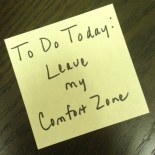
Everything you want is just outside your comfort zone. (Robert Allen, author/speaker)

I have recently been busy updating my social media accounts, an activity many would find easy as it simply involves updating profiles and sharing useful messages and articles. However, for me, it is not so easy. It takes me right out of my comfort zone and, when I wonder why, I think this is because part of me fears being judged through social media’s power to amplify public opinion.

What will other people think of me? What happens if a negative comment is posted on my LinkedIn or Facebook page for all to see? What happens if someone disagrees with me?

In the end I sometimes find myself procrastinating over the perfect wording to avoid judgments being made. Perhaps that is the lawyer in me requiring 100% accuracy and perfection! However, is perfection possible? Can I really control other people’s reactions in this way? No, of course I can’t, and the immediate and public nature of social media does not allow for this. To be noticed you need to step out of the norm (despite the risk of attracting diverse attention). There is also no time for procrastination when you have a business to run!

As well as procrastination being a risk factor, the fear of being judged can be really debilitating for some people. It can quickly lead to a loss of self-esteem as it causes individuals to become anxious or easily embarrassed. Not many people want to look silly and this can lead to individuals keeping quiet rather than doing what they want to do.

Does this fear sound like something that is affecting you from confidently moving forward with your ideas?  If so, use these three steps to help you to challenge your fear.

  1. Be decisive – do you want your fear of being judged to hold you back?  Your fear affects your feelings and these feelings affect your behaviour, preventing you from achieving what you want to achieve. Don’t let the opinions of others become more valuable than your own individuality, allowing others to hold you back. You may miss the career opportunity you have always hoped for.
  2. Be curious – think of something more useful to believe.  It is your thought patterns around fear which need to change first to enable you to change your behaviour. Instead of holding a fear of judgement, replace your thoughts with curiosity. You may learn new things that help you move forward with your plans and strive towards your goals.
  3. Take action….    

…..I am now going to be bold and take action by inviting you to follow me on LinkedIn or to Like my Facebook page. Please also share anything that you believe would be useful to others. I share lots of information to help those wishing to change career, develop their career or improve performance.

I am also thinking about making and sharing short video clips with helpful career tips…watch this space!

Everything you want is just outside your comfort zone. (Robert Allen, author/speaker)

http://www.tessaarmstrong.co.uk

How to deal with criticism

maze

“I really struggle when my work is criticised. I take it personally and can feel stressed for days afterwards. I become really nervous and worry that my work will never be good enough. What can I do to stop myself feeling like this?”

It can be really difficult to accept criticism. You can end up feeling angry, frustrated and demotivated. Criticism can also really knock your confidence.

Dealing with your emotions after being given criticism can be difficult and so here are a few tips to help you deal with it constructively:

  1. Accept that no one is perfect. Placing unrealistic expectations on yourself can cause a lot of stress so ensure your expectations are reasonable.
  2. Replace the word ‘criticism’ with ‘feedback’. Feedback is a more positive word and can put you in a better frame of mind to deal with it. Ask yourself what you can learn from the feedback to help you move forward.
  3. When you are being given feedback, ensure you understand it properly and be open to what the other person is saying before you respond. Once you have this understanding, you can ask questions to clarify what the person giving you feedback is wanting from you and what changes you can make to improve your work. This gives the conversation a positive forward thinking focus.
  4. Don’t take it personally. Perhaps model yourself on someone you know who takes feedback well. How do they behave? How do they talk and act? Write down 10 qualities you admire about this person. Now identify what they do, that you currently do not do and think about what you need to believe in order to behave in the same way. Next time you receive feedback, use this new belief and try a different response.       Keep going until you start seeing the difference!

Throughout your career, there will always be someone who may criticise you. You are not alone. Even the most successful people are criticised. It is how you deal with it that is important. Keep in control and use any constructive criticism to enable you to become an even better employee.

www.tessaarmstrong.co.uk

9 ways to improve your time management skills

maze

‘I never seem to have enough time to complete my work. I work really long hours and no longer have time to do the things I enjoy out of work. It is making me feel stressed.’

It can be really difficult managing a large workload. You can end up feeing exhausted and extremely stressed.

If this sounds familiar, perhaps take some time to review how you spend your time at work.   Use the following points to assist:

  1. Every morning make a list of the tasks you must complete that day and a separate list of tasks that you would like to complete if you had time.
  2. Do the thing you least want to do first. You will be so pleased when you have achieved it and feel motivated for the rest of the day.
  3. Eliminate all distractions when working on a large piece of work. For instance, turn your mobile off and close your emails.
  4. Focus on one thing at a time. For example, allocate part of the day to making telephone calls and another part to responding to emails and clearing your inbox.
  5. Are you expected to do everything yourself? If possible, delegate some of your work.
  6. Learn to say ‘no’ when you have too much work to do and to explain the reason why.
  7. If you are struggling with a piece of work, ask for help. Feeling that something is beyond your capabilities can make you feel out of control.
  8. Do you need to work late every day? Ensuring you leave work on time at least once or twice a week will free up time for your personal life.
  9. Plan to do something you enjoy at least once a week.

Often the smallest alteration to your working day can make the biggest difference in enabling you to work more quickly and effectively. It can also ease feelings of stress and allow you to enjoy your life again.

www.tessaarmstrong.co.uk

For lawyers – What to do when you feel dissatisfied at work

maze

‘I have been wondering whether law is the right career for me for a while now. I don’t feel very motivated or satisfied at work but my options are limited as my skills are so specialised.’

It is not uncommon for lawyers to consider a career change when they are feeling demotivated or dissatisfied at work.   If a recent event has made you feel this way then wait until the situation has calmed down or you have managed to resolve it before you make any decisions.

Also, take a look at your current situation. What specifically is bothering you about your current situation –   is it the working environment, the subject matter, your work-life balance or something else? A career change may be the answer but consider other solutions too such as changing law firm, changing specialism, in-house work, further training and development, seeking help from your supervisor or even pursuing a hobby out of work.

If you do decide that a career change is right for you, the good news is that you do have transferrable skills. Start having a think about them now. Your skills are likely to include people skills, advanced drafting skills, research and problem-solving skills, excellent oral skills as well as many others that make you employable. You can then start investigating career options that closely match your set of skills.

Remember, with all challenges you face, if you keep doing what you are doing you will keep getting the same result. Try new techniques and tools to help you succeed and if you think a career change is for you, start your investigations now!

www.tessaarmstrong.co.uk

Does perfectionism hold you back?

maze

I have coached many people who define themselves as perfectionists. They approach me because they are struggling to move forward with their career for fear of making the wrong decision.

Perfectionists do not want to ‘fail’. They often want to ensure that any decision they make is absolutely perfect before proceeding with it. However, the only way they will know if their decision is right is by giving it a go and taking a risk. This turns into a catch-22 situation and the decision making process becomes extremely difficult and stressful.

It is really important to be aware of when perfectionism is helping you move forward and when it is hindering you. It can be a great characteristic for doing work brilliantly (although it can be unrealistically expected of individuals) but it can also hold you back from making decisions and attempting new things. For example, delaying a career change for fear of failing or choosing not to apply for a job because you believe other people will be better than you.

If you feel perfectionism is holding you back, ask yourself the following questions:

  • What is the worst that can happen?
  • How can you make it better?
  • What small step can you take now to bring you one step closer?

Also, have a think about the standards you are setting yourself. Are they too high?

Always set standards that are high, but achievable. Setting standards that are too high can be like setting yourself up to fail. How about lowering the bar, making your goals something you know you can and will do rather than something that is always beyond your reach.

www.tessaarmstrong.co.uk

Lawyers – Are you fed up with stressful days and sleepless nights?

corporate

The obsession with billable hours…

Many lawyers tell me they are becoming increasingly stressed at work. They do not enjoy their job and have no work/life balance. They are feeling really fed up and see no way out.

When I hear lawyers talking like this, I can usually predict the cause of this kind of stress and it normally comes down to targets and billable hours.

Each day a lawyer is faced with a battle against the clock of chargeable hours. Some days they win this battle and achieve their target hours and some days they do not. On the days they do not, they leave the office feeling drained and demotivated. After all, lawyers like to win!

When the days of winning become less frequent, the obsession with dividing the day into 6 minute units commences.

How have I only charged 6 hours when I have been sat at my desk for 12 hours? How can I stop writing off time? How can I ask for more work? Do I have time to waste a unit by making a cup of tea? How quickly can I run to the toilet?!

Slowly, the lawyer loses all perspective on life.

If you feel your stress levels are rising due to unachievable targets, please take some time to stop and review matters before you start counting how many units it takes to make a cup of tea. There may be changes you can make to your case load and working day that will make all the difference.

For example, if the hours you record are not a true reflection of the number of hours you have been sat at your desk, start making a detailed note of what you are doing during non-changeable time. Whilst doing this, have a think about the following questions:

  1. Do you need more work? If so, arrange a meeting with your boss to discuss your workload.
  2. How do you structure your day? Are you working in a productive manner or do you find yourself flitting between different tasks? It is very difficult to focus and record time accurately when flitting between tasks. Ensure you allocate specific times of the day to answer emails, make phone calls and review your post. When concentrating on one task, do not allow yourself to get distracted by the phone, your email or anyone else.
  3. Do you write off time? If you feel a piece of work has taken longer than it should have, perhaps check with your boss before choosing to write off time. It may be a piece of work that required you to take a long time.

As you become more productive, your billable time will increase and you will be able to enjoy life out of work again.

As an alternative, should we all be thinking about scrapping billable hours and target hours? According to Roll on Friday’s firm of the year, this is one of the reasons Slaughter and May usually rates higher in the work/life category than other Magic Circle firms. Perhaps this is the way forward?!

www.tessaarmstrong.co.uk

Six ways to find career happiness

maze

Do you long to be able to say ‘I LOVE MY JOB’?

Do you want to be able to respond with passion and excitement to the frequently asked question ‘What do you do?’.

Do you want to enjoy Monday mornings and feel relaxed on Sunday evenings?

Are you so fed up at work that even answering these questions has made you feel depressed? You actually dread Monday mornings and feel full of anxiety on Sunday evenings.

Feeling miserable at work is really tough. It impacts your career, as you become increasingly disengaged with work, and your home life becomes a struggle too. We don’t want to feel like this but often we do not know how to make it better. How do we find a career that makes us happy?

Let me tell how….

You will find six action points below which will help you to find a career that makes you happy. Please take time to go through each step. Remember, it is a process that cannot be completed overnight. It will take time but will be worth it. 

  1. You – take time to think about you. What do you enjoy doing and what interests you? Think of times when you felt really motivated and fulfilled – what were you doing? Be as specific as you can. You want a career that takes advantage of these skills, strengths and interests.
  2. Your personality – Work out what kind of working environment would best suit you? Do you like going to the office each day or do you prefer being out and about? What makes you feel happy and comfortable?
  3. Your money – We are often preoccupied with how much we are earning and make this our primary focus in a career search. We all need money but how much do you really need to be happy?   Do not let salary solely dictate your career path. Decide on a realistic salary band. Remember some of the top 20 most satisfying careers are the lowest paid.
  4. Your vision – Having progressed through points 1- 3, now think about your first day in your ideal job. What are you doing? Who do you meet? Where are you? Who do you talk to? How are you feeling? What skills are you using? Focusing on the detail will make action five easier to achieve.
  5. Your investigations – spend time researching opportunities that you believe closely match your vision. Talk to people. Do some work experience. Keep asking questions and discovering what makes you happy.
  6. Your plan – Start making decisions and create an action plan to find the job you love.

These actions may require taking a step into the unknown. However, they will give you the best chance of finding the job that you love whilst providing your work-life balance with a happy boost.

Remember it is YOUR career – it is about YOU and what makes YOU happy.

www.tessaarmstrong.co.uk

How to stop stress preventing you from pursuing changes in your career (in two easy steps!)

career-coaching

‘The best way to make decisions is to go after what it is that creates meaning in your life and trust yourself to handle the stress that follows.’ 

How to make stress your friend, Kelly McGonigal (TED talk)

I recently listened to the Ted talk, How to make stress your friend by Kelly McGonigal, and it reminded me of the decision-making process I went through to make a career change. After a lot of research, I had reached a point when I had an idea of what I wanted to do but my fear that a career change would be too stressful initially prevented me from pursing my idea.

Like many of us, I was viewing stress as a negative thing. The thing that causes us to lose sleep, eat too much or eat too little. It can make us feel anxious and it can make us grumpy. We all respond to stress in different ways and, when our response is negative, we develop fears and avoid making decisions.

In her TED talk, McGonigal talks about how we should change our thinking and view our response to stress in a positive way to enable us to move forward with decisions. In particular, she explains how we can become resilient to stress through human connection and reaching out to others. In building this resilience, we can then trust ourselves to handle life’s challenges and we won’t be alone whilst doing it.  If you are at a crossroad in your career and finding it hard to decide which direction to go in, my suggestion to you is do a reality check through a very simple two-step process:

  1. Become aware of what is concerning you and making you feel stressed. I remember when I was thinking about a career change, I was concerned about telling people – what would their reaction be? I was also concerned about venturing into the unknown.
  2. Acknowledge and accept your concerns and create a simple statement such as ‘I acknowledge that the change will be stressful to me but I know my need is greater and it is worth going through the stress. The benefit is that I will have a job I want’.

http://www.tessaarmstrong.co.uk

Are you tired of being available 24/7?

career-coachingIs it time to turn off your work emails, log out of Facebook and allow yourself some peace and quiet?

A recent article titled, The busier you are, the more you need quiet time, prompted me to think about the impact of instant communication on our everyday lives and how it is becoming increasingly difficult to find quiet time to think, relax and rejuvenate.

Instant communication dominates our lives, allowing us to be in continuous communication with others. We are bombarded with communication through mediums such as Facebook, Twitter, email, WhatsApp and text messaging. Tablets and mobile phones have become an important part of our day as we cling on to them in anticipation, waiting for them to buzz, beep or ring.

According to research carried out last year, the average person swipes, taps and pinches their display about 2,617 times a day and spends about 2.42 hours a day touching the smartphone display. Furthermore, 87% will check their phone at least once between midnight and 5am.

The acceptance of instant communication being available 24/7 has weakened the boundaries of time defining when it is acceptable and not acceptable to contact someone and this has resulted in the incompatible overlap of work and play. If your boss emails you at 10pm, does he or she expect a response that evening? Is it right to answer a work email whilst giving the kids tea? Should we be checking Facebook whilst at a friend’s house?  Is it right to be responding to personal messages whilst at work? The boundaries are becoming blurred making it harder to understand when it is acceptable to switch off without undermining our friendships or work ethic.

This bombardment of instant communication makes us feel overloaded, tired and stressed. We are starting to see people becoming disillusioned with the continuous flow of Facebook communication or increasingly stressed by the constant access to work email. The return of the iconic Nokia 3310 has even caused excitement as we reminisce about the days of being unable to check emails and Facebook on our phones (although, I have recently read that these may have 4G!).

Is it now time to switch off?

Have a think about how you can temporarily switch off from the instant communication in your life and restore the boundaries of your work-life balance. Can you turn off your work emails at appropriate times of the day? Can you limit yourself to checking Facebook once a day? Can you allocate a day, or part of a day, each week for quiet relaxation? Perhaps you can go for a long gadget-free walk, read a book or listen to some music. Just think how refreshed, fulfilled and happier you will feel when you allow yourself some peace and quiet each week.

Ensure you take time out of our busy world to give yourself time to think and relax.

www.tessaarmstrong.co.uk