
Are you fed up of worrying about your career?

careerpath

When looking back at 2017, were there things you were worried about in your job or career which you now realise were not worth the worry?

Perhaps you were worried about not being good enough for your new job.

Were you anxious about a work appraisal?

Perhaps your family and friends were telling you not to change career making you worried about it all going wrong if you went against their advice.

Were these things worth the worry? Did worrying make you feel happy and positive, driving you towards a fulfilling career, or did it make you feel stressed and tired?

Worrying can make you feel miserable.  It stems from negative attitudes and beliefs and can delay decision making and progression.  A common belief which causes worry is thinking you are not good enough.  This belief frequently stops people achieving what they want to achieve.

If you found 2017 to be a year of worry and would rather make 2018 a year of self-control and planning, then first have a think about your current beliefs about yourself and ensure you adopt an ‘I can’ attitude.

With this new positive attitude, you can then move forward with your career planning, using these questions to help focus your ideas:

  1. Do you still want to be in your current job in 2019? What can you do over the next year to develop within your current role?
  2. Do you want to progress within your organisation? What is your next role and what can you take on to enable you to progress?
  3. Do you want a career change? If so, what is your overall goal and what steps do you need to take to get there in 2018?

Leaving behind the worry and taking control of your thoughts will enable you to decide what you want in your career and have the confidence to achieve it!

www.tessaarmstrong.co.uk

Does looking at past events help you change career?

motivation-clipart-cliparti1_motivation-clipart_05“If you change the way you look at things, the things you look at change” (Wayne Dyer)
An increased understanding of your response to past events, enables you to think more positively and develop greater self-confidence to act on the best career decisions for you.

When I first meet an individual for career coaching, I am often greeted with a look of surprise when I ask them to rate everything they have done from school to date by their motivation. I can understand their surprise, for they have come to me for help with their future career path and not their past. However, it is an invaluable exercise in identifying attitudes and beliefs which can hinder or help the career change process.

Our attitudes and beliefs are shaped through our response to experiences and events and dictate how we feel and behave. When our response to an experience forms a negative belief, we can feel miserable and our motivation for exploring new and exciting career possibilities is low. In contrast, when we have positive thoughts, our motivation is high, and we become far more willing to try new things.

In reviewing our motivation from past experiences, we can start to identify our positive and negative beliefs, and this can help us make future decisions. I will show you how through two examples:

1: Negative beliefs

I work with many solicitors who initially give their motivation at work a low rating. One common reason for this is the frequency of having to deal with telephone calls from unhappy clients. Dealing with these calls can make individuals feel anxious about speaking on the phone as they begin to mistakenly believe they are not good at dealing with people. Consequentially, they decide that their next career move must avoid this. When thinking of a career change, it is important to deal with negative beliefs such as this and learn to change them to avoid closing the door on possible opportunities too early in the career change process.

2: Positive Attitudes

In reviewing past events, we can also identify experiences that made us respond with a positive attitude and feel really motivated. Perhaps you did some volunteering for a charity which made you feel good about yourself and wanting to do more. In reviewing these positive experiences, it is important to look at what specifically you were doing during the experience that made you respond in this way – these activities and skills will be relevant when deciding on a best fit career.

Evaluating past events helps you to understand your thoughts and beliefs. How you think will affect how you feel about your next career choice and the subsequent action you take. Positive thoughts and beliefs will enable you to make the best decision regarding your career.

www.tessaarmstrong.co.uk

The importance of learning to say ‘no’

email-cartoon.jpg

Learning to say no is about making a choice to focus on what is important to you, enabling you to reduce feelings of stress and freeing up time to focus on your personal goals and values.

How often do you check your emails each day? They are really distracting, aren’t they? I find that I must physically close my inbox to stop me looking at my emails, otherwise I am too easily distracted by those unread new arrivals in bold that are shouting at me to respond ‘NOW’.

Responding to emails is a great example of a daily task that prevents you from being effective and is often the cause of time management issues. Let me explain its true impact by relating it to Stephen Covey’s 3rd habit, ‘Put First Things First’.

In his book, ‘The 7 Habits of Highly Effective People’, Covey describes a time management matrix dividing how we spend time in to one of four ways, defined by the importance of the task (does it provide results?) and the urgency (visible tasks):

  1. Urgent and Important tasks – immediate and important deadlines (often a crisis or problem) Focusing on this area can cause a lot of stress.
  2. Not urgent and important – to develop effective personal management – activities that will move you forward in your career.
  3. Urgent and not important – Time pressured distractions such as email. These are not really important but someone wants it now.
  4. Not urgent and not important – Activities that have little value but can be relief from other work.    

Checking emails most frequently falls within category 3. However, we often mistakenly think they are category 1 tasks which explains the distractive nature of emails. This misunderstanding usually arises from the expectations of others rather than the email itself being THAT important.

The problem of being consumed by category 3 means that little time is left for the not urgent and important jobs in category 2. Category 2 tasks help personal development, the discovery of new opportunities and provide solutions to resolving problems in category 1. Failing to spend time on this category can lead to neglecting important areas of your life and career.

One way to resolve the heavy focus on category 3, is to learn to say no. Identify your priorities and manage the expectations of others by identifying those emails that can wait. This can relate to any category 3 task.   Even if you are asked to do something good, if it keeps you from what you really want to be doing then learn to say no in a respectful and pleasant manner. Keeping a focus on category 2 can make a huge positive difference to the effectiveness of your working and non-working life.

Remember: Every time you say yes to someone else’s priorities, you are saying no to your own priorities.  

www.tessaarmstrong.co.uk

Three steps to overcome your fear of being judged

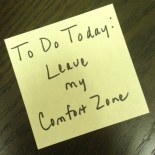
Good-bye-Comfort-Zone

Everything you want is just outside your comfort zone. (Robert Allen, author/speaker)

I have recently been busy updating my social media accounts, an activity many would find easy as it simply involves updating profiles and sharing useful messages and articles. However, for me, it is not so easy. It takes me right out of my comfort zone and, when I wonder why, I think this is because part of me fears being judged through social media’s power to amplify public opinion.

What will other people think of me? What happens if a negative comment is posted on my LinkedIn or Facebook page for all to see? What happens if someone disagrees with me?

In the end I sometimes find myself procrastinating over the perfect wording to avoid judgments being made. Perhaps that is the lawyer in me requiring 100% accuracy and perfection! However, is perfection possible? Can I really control other people’s reactions in this way? No, of course I can’t, and the immediate and public nature of social media does not allow for this. To be noticed you need to step out of the norm (despite the risk of attracting diverse attention). There is also no time for procrastination when you have a business to run!

As well as procrastination being a risk factor, the fear of being judged can be really debilitating for some people. It can quickly lead to a loss of self-esteem as it causes individuals to become anxious or easily embarrassed. Not many people want to look silly and this can lead to individuals keeping quiet rather than doing what they want to do.

Does this fear sound like something that is affecting you from confidently moving forward with your ideas?  If so, use these three steps to help you to challenge your fear.

  1. Be decisive – do you want your fear of being judged to hold you back?  Your fear affects your feelings and these feelings affect your behaviour, preventing you from achieving what you want to achieve. Don’t let the opinions of others become more valuable than your own individuality, allowing others to hold you back. You may miss the career opportunity you have always hoped for.
  2. Be curious – think of something more useful to believe.  It is your thought patterns around fear which need to change first to enable you to change your behaviour. Instead of holding a fear of judgement, replace your thoughts with curiosity. You may learn new things that help you move forward with your plans and strive towards your goals.
  3. Take action….    

…..I am now going to be bold and take action by inviting you to follow me on LinkedIn or to Like my Facebook page. Please also share anything that you believe would be useful to others. I share lots of information to help those wishing to change career, develop their career or improve performance.

I am also thinking about making and sharing short video clips with helpful career tips…watch this space!

Everything you want is just outside your comfort zone. (Robert Allen, author/speaker)

http://www.tessaarmstrong.co.uk

Have you experienced the two year itch in your career or job?

Image result for free career clipart images

When will I be able to change jobs? How will my career develop? Do I want a career change? If these questions sound familiar to you, what do you do to find the answers?

It is really common for individuals to start reviewing their career having been in a job or role for two years or more.

We start a new job with such enthusiasm and motivation, jumping out of bed on a Monday morning keen to ensure we get ahead in our careers. We want to perform well and develop a fantastic and fulfilling career, until that well known ‘Monday morning feeling’ gradually creeps in. As time has moved on, we have settled into our new job and are familiar with our day to day role. We become restless and start wondering where our career is going.

If you have got to this point, how can you now restore the motivation and enthusiasm you once had when you started your new job? How can you prevent your 2 year itch developing for the next 2, 3 or even 4 years? It all comes down to two main options:

  1. Stay in your current job

Often it is much easier to simply stay put than find a new job. If you decide this is the right career path for you, then finding techniques to improve your motivation should be the first item on your to-do list. Perhaps take this opportunity to review where you are in your career, what you have achieved and what you want to achieve next. Start planning your career path, set yourself challenges at work and establish ways to achieve your ambitions. Make sure you tell people at work about your career ideas and plans. This will give you the best opportunity of achieving your ambitions and restoring a good Monday morning feeling.

  1. Change Job/Change Career

If you decide changing career or job is the best career choice for you, take time to evaluate your career options, working out what you want and exploring possibilities and opportunities. Talk to people to find out more about specific roles, jobs and careers. This is the best way to discover the best job move or career choice for you.

For further help, click here for my free career resources.

Remember, the more consideration you give to your career development, the better your decisions are going to be.  

http://www.tessaarmstrong.co.uk/

Who is the best person to tell you what job you should do (and it’s not me!)?

maze

We all want someone to tell us what job we should do, to make the decision on our behalf so we can simply focus on enjoying our career.

Sounds good, doesn’t it? I know that’s what I wanted when I was pursuing a career change. The decision-making process was hard work and I just wanted someone to tell me what to do. When I was advised that the best decision would be the one I made for myself, I realised I needed to take responsibility and do some serious thinking!

What did I discover? I found that I was frequently being given advice on what I should or should not do and I didn’t know which advice to follow. I soon realised I would be far more committed to a decision I had made personally, rather than a decision someone had made for me or advised me to make, and what I really needed to do was develop a thorough understanding of my skills, passions and aspirations to enable me to make that decision.

Still not convinced? Let me give you another example….

Do you remember the career advice you received at school?

I have a very distinct memory sitting in the school careers room completing a personality questionnaire and subsequently being advised, amongst other things, that I should be a probation officer. It was as simple as that…the answer to my future career was found by completing a 10-minute test. Was this the right answer? Well, I did not become a probation officer!

There can be limitations in being pigeon holed into a specific career before you are ready to make that decision. It can lead to career paths being pursed but not enjoyed and an individual’s confidence being knocked. Many people need time to build their self- awareness and once they really understand what they want from their career, they will then be in the best place to move forward. Many of my clients say they regret following early career advice for this reason. They wish they had spent more time thinking about and discussing their personality and aspirations before taking the next step.

Have I just talked myself out of a job?!

No, because the best thing about all of this is that, although it may be up to you to make the decision, you do not have to go through the process alone. I become part of the process when individuals become stuck and need some help and guidance in moving forward. I help individuals build self-awareness to enable them to discover and explore different career possibilities and find the best career choice for them. I also help individuals to eliminate issues of procrastination, fear and anxiety to enable them to believe that they can achieve a fulfilling career. Career advisers can also help with the decision-making process.

It is all about you and how your career is going to fit in with your life. You may need a bit of guidance and assistance in getting there but….

…the best career decisions are those that you make and discover yourself.

www.tessaarmstrong.co.uk

www.careerchange.blog

Four focus points to help you make a good impression when starting a new job

Handshake

I was recently asked if I had written a blog on starting a new job and making a good impression and was surprised to discover that, over seven years of writing about careers, I had not yet covered this topic. This month I am therefore going to write about four focus points to help you make a good impression when starting a new job.

Making a good impression

When starting a new job, you want to make a good impression. You want to be liked and do your job well. The question is, how do you do this when there are so many different aspects to starting a new job that you have yet to discover. What will the office culture be like? What will my boss/colleagues be like? How will I fit in? What will my daily routine be like?

Starting a new job is an exciting time but can also feel daunting as there is so much to think about and take in. Planning for every eventuality is an impossible task. However, what you can do to help you prepare is to think about your approach to the job and I have identified four focus points to help you:

    1. Preparation: Ensure you are prepared for your first day. What do you need to bring? What are you going to wear? Have you researched the company/organisation?
    2. You: Be open to new ways of doing things and be careful to avoid comparing your new job to your last one. It is important to be confident but not arrogant!
    3. People: Introduce yourself and spend time listening and getting to know people so you can understand more about the office culture and the way people work. Work out who you can go to for help (the things you don’t want to bother your boss with). Ask questions, but not too many.
    4. Work Routine: Throughout your first week, spend time working out the most productive way to structure your day. Be organised and write notes to help you organise the range of information you are given and remember the names of people you have met.

Managing your new job and making a good impression will be a lot easier by being prepared, organised and open to new opportunities! Most importantly, it will help you to enjoy the new experience!


www.tessaarmstrong.co.uk

www.careerchange.blog

How having a mentor can increase career opportunities

bluesky1

Mentoring is a fantastic method of improving career development. It can help employees achieve great results, improving job satisfaction and increasing career opportunities. It can also enable businesses to increase productivity and retention.

Many businesses are now using mentoring schemes to help develop the careers of their employees. It can be hugely beneficial, improving both business performance and reputation as well as enabling individuals to pursue fulfilling and rewarding careers.

Without a mentor, an individual can start to feel lost within their career and perhaps lose some control over their career development. This can lead to a decrease in job satisfaction and increased stress at work. The worst-case scenario may be that the employee leaves the organisation feeling negative about both their employer and career.

The use of a mentor can be such a simple and effective way of preventing occurrences of this worst-case scenario. A mentor can really help individuals to maintain control of their careers whilst improving their performance and skills.

You may be thinking that this sounds similar to coaching but it does differ in that the mentor is a trusted adviser and teacher with experience in a specific field and knowledge of a particular organisation whereas a coach uses an objective process to enable an individual to achieve goals and overcome challenges they face. In fact, coaching and mentoring can really complement each other.

Who should be my mentor?

A mentor must be a more experienced colleague who is willing to share their skills, knowledge and experience to assist the career development of others. In choosing the right one for you, ensure they have relevant experience that will be of benefit to you. It is also important that you feel you are able to trust and respect their advice. Your mentor should not be your line manager as your manager will have expectations of what you should do and may not allow for opportunities to broaden your thinking in an open and honest way.

Another important consideration is the network of your mentor. Do they have a wide circle of contacts and will they be open to introducing you to new contacts? Networking is of course another great way to advance career development.

If your organisation does not have a mentoring scheme, perhaps talk to your line manager about the possibilities of you having a mentor. Discuss some of the benefits as outlined above as well as showing how it demonstrates your commitment to your career development and performance.

Mentoring is a win-win situation for both the employer and the employee and schemes should be implemented in all organisations to ensure success against competitors in this tough economic climate.


www.tessaarmstrong.co.uk

Create a winning CV NOW!

bluesky1

It’s all about making your CV stand out from the crowd.

It can be difficult drafting a great CV, particularly if you haven’t had the need to use one for a while.

What’s the best format? How long should it be? How do I explain a gap in employment?
There are so many questions to answer and, without proper thought and preparation, it can be easy for these to remain unanswered causing mistakes to be made.

Here are just 5 of the most common CV mistakes:

  1. Failing to list achievements.

Remember you are not drafting a job specification. Avoid simply listing the responsibilities for your job.

  1. Being too general.

If you ‘managed projects’, state how many, what they were and give an example of when you really achieved in managing a project. Make sure all detail you provide is relevant to the job.

  1. Mentioning why you left a job.
  2. Lying – you will be caught out!

…and the most common mistakes are…

  1. Spelling mistakes and typos.

Saying you started your current role in 1910 and that you’ve got ‘good attention to derail’ will not impress!

Make your first impression a good impression.

http://www.tessaarmstrong.co.uk

How to have a successful job interview

Handshake

You have applied for a job and made it to interview stage – congratulations! Now is the time to demonstrate to your interviewers how brilliant you are.

How do you do this?

You spend time preparing for your interview to ensure you make the most of this opportunity.

Here are some useful topics for you to think about whilst making your preparations:

  1. Practical steps
  • Know the time and place of the interview.
  • Do you need to confirm your attendance?
  • Find out who is interviewing you and the type of interview (e.g. will it be competency based?).
  • Ensure you have all the paperwork requested and take a copy of your CV/application.
  • Have you got an appropriate outfit to wear?
  • Take with you a contact telephone number, map and the interview confirmation letter.


  1. Research the company

Use the internet and your contacts to find out about the company. How is it developing? Why do you want to work there? What are the major challenges facing the company?

  1. Key points

Outline the key points you would like to get across during the interview in line with the job description, highlighting key aspects of your experience, qualifications and skills.

  1. Typical questions

Prepare answers to typical interview questions. For example, define your key attributes and provide examples of when you have demonstrated these.  In response to competency questions, consider examples that relate to the job you are applying for. For example, if you need to influence people think of an example when you have won someone over in a way relevant to the role.

  1. Difficult questions

Prepare persuasive answers to difficult questions. These could be relating to weaknesses or gaps in employment.

  1. Questions for the interviewer

Prepare a couple of constructive questions to ask the interviewer.

  1. Rehearse

Find a trusted friend or relative to practise your answers with.

Imagine how great you will be in the interview having spent time preparing answers in line with the above points compared to a candidate who has quickly read through the job specification the night before. Preparation is definitely the key to success

http://www.tessaarmstrong.co.uk